

Key Insights from the Knowledge Session
As Indian fintech companies increasingly look to expand globally, understanding the regulatory landscapes of key markets becomes paramount. The India Fintech Foundation recently hosted a Knowledge Session on “Cross-Border Regulations – An Analysis (HK–Singapore–Dubai)” featuring Samir Satchu, a regulatory lawyer specializing in the MENA region, and Syed Musheer Ahmed, an expert in Southeast Asian fintech ecosystems.
Dubai, Hong Kong, and Singapore present compelling opportunities for cross-border fintech ventures, each with distinct regulatory frameworks, addressable markets, and ecosystem enablers. These three hubs are particularly attractive as gateways for regional expansion in their respective areas: the Middle East and North Africa (MENA) for Dubai, East Asia for Hong Kong, and Southeast Asia for Singapore.
Dubai: A Strategic Hub for MENA Expansion

The UAE has witnessed an acceleration in new regulatory frameworks over the last five years, creating significant opportunities for fintech companies. The regulatory landscape covers CBDCs, virtual assets, Electronic Money Institutions (EMIs), digital banks, retail payments, digital remittance, and open banking—demonstrating the UAE’s commitment to building a comprehensive fintech ecosystem.
The UAE’s regulatory environment features multiple financial services regulators, including the Central Bank of the UAE, Securities and Commodities Authority, the Dubai Virtual Assets Regulatory Authority (VARA), and the offshore jurisdictions of DIFC and ADGM. This multi-regulator structure requires careful navigation based on the specific services and market segments a company targets.
Importantly, Dubai and the UAE function as a platform for wider GCC expansion. The GCC’s combined GDP is approximately 80% of India’s GDP despite a much smaller population, representing a high-value market. Jurisdictions like DIFC, ADGM, and Bahrain are specifically designed for global customer acquisition, meaning companies can operate with expanded geographic reach while maintaining a UAE base.
Indian fintech companies are already pursuing market entry strategies in the UAE through both acquisition and organic routes. CoinDCX’s acquisition of BitOasis in 2023-2024 exemplifies the acquisition strategy, granting immediate access to multiple licenses and regional expansion capabilities. Meanwhile, companies like PayTM are pursuing organic expansion, building regulatory compliance from the ground up.
A particularly timely cross-border opportunity involves the UAE-India remittance corridor. The UAE Central Bank and India’s Reserve Bank of India signed an MOU in 2023 focusing on collaboration improvements. Across the GCC, remittance houses are exploring stablecoin settlement models for Indian remittances—enabling disbursement to Indian beneficiaries through Virtual Asset Service Providers. While regulatory grey areas persist in India, this represents a high-potential emerging use case for fintech companies.
Hong Kong: Asia’s Largest Financial Center

Hong Kong represents Asia’s largest financial center with a vibrant, globally oriented fintech ecosystem. Operating under a “one country, two systems” framework, Hong Kong maintains its own legal system, common law traditions, and independent regulatory regimes completely separate from mainland China. This autonomy extends to financial services, virtual assets, and wealth management—making it significantly more open than mainland China despite geographic proximity.
Hong Kong’s fintech ecosystem comprises approximately 5,000 startups, with about 25% being fintech-related. The ecosystem heavily emphasizes B2B and B2B2C business models (67% B2B), with 82% of companies targeting the Hong Kong market and 75% targeting Asia broadly. The financial industry is substantial, featuring $3.99 trillion in asset and wealth management, $3.55 trillion in banking assets across 150+ licensed banks, and significant activity in digital payments, securities trading, and insurance.
Wealthtech emerges as the largest fintech subsector with 198 companies, followed by blockchain applications and payment/remittance services. The ecosystem is supported by government funding mechanisms including Cyberport’s various programs, with seed funding up to HK$100,000 (US$12,000) and co-investment opportunities through programs like the Innovation and Technology Venture Fund (HK$2 billion available).
For Indian fintech companies, Hong Kong offers particular merit for B2B solutions. The city’s position as the top IPO hub globally, its strength in wealth management, and its regulatory sophistication make it attractive for companies seeking regional headquarters for Asian expansion. The regulatory environment continues evolving positively, with recent developments including the Stablecoins Ordinance (effective August 2025) and initiatives like Project Ensemble for tokenization adoption.
Singapore: Leading Cross-Border Payments Innovation
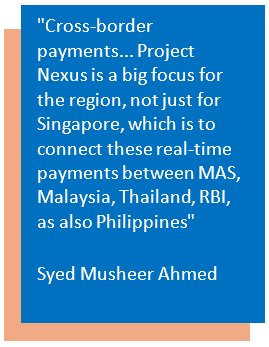
Singapore hosts over 1,000 fintechs across payments, wealth tech, and RegTech sectors. The city-state is pioneering regional payment connectivity through Project Nexus, a landmark initiative connecting real-time payment systems across Singapore, Malaysia, Thailand, India, and the Philippines. The project recently transitioned from pilot to a live operational entity, Nexus Global Payments (NGP), incorporated in Singapore and backed by central banks from the five participating nations.
Singapore’s fintech regulatory framework emphasizes cross-border payments and digital asset innovation. The Singapore Payments Network (SPaN), established in June 2025 by the Monetary Authority of Singapore and the Association of Banks, oversees national payment schemes and fosters inter-institutional collaboration. Recent regulatory milestones include the Protection from Scams Bill (January 2025) and regulations for digital token service providers (June 2025).
For Indian fintech companies, Singapore offers strategic advantages in accessing Southeast Asian markets. The UPI-PayNow integration exemplifies the regional interoperability India can leverage, while Project Nexus provides a direct pathway for real-time cross-border settlements with Indian beneficiaries.
Conclusion
Dubai, Hong Kong, and Singapore each represent distinct but complementary gateways for Indian fintech expansion. Dubai provides access to the high-value MENA market through proven acquisition and organic strategies; Hong Kong offers a sophisticated, globally-connected financial hub ideal for B2B fintech solutions; and Singapore leads regional payment innovation with direct connectivity to India. Understanding each jurisdiction’s regulatory frameworks, ecosystem strengths, and expansion pathways is essential for Indian fintech companies seeking sustainable global growth. The knowledge session reinforced that cross-border success requires tailored approaches combining regulatory expertise, market selection, and operational flexibility.
Author : Anurag Kumar, India Fintech Foundation
